- Call : (818)789-0088
- [email protected]
- 23923 Ventura Blvd, Calabasas, CA 91302

Business growth is a strong indicator that your company is moving in the right direction. However, expansion also places new demands on your internal systems, especially your IT environment. What once worked efficiently for a smaller team can quickly become a source of delays, instability, and risk. As your workforce grows, data volumes increase, and operations become more complex, underlying technology limitations begin to surface. These issues are often not visible during early stages but emerge when systems are pushed beyond their original capacity. This article outlines what business growth typically exposes about your IT setup and how to address these challenges with a more structured, forward-looking approach.
Growth directly impacts how your systems are used. More employees mean more devices, software licenses, and access requirements. At the same time, daily usage across applications, file storage, and communication platforms increases significantly. Systems that previously handled workloads without issue may begin to slow down. Users may experience delays, application crashes, or inconsistent performance. Without proper scaling, these disruptions become more frequent and begin to affect overall productivity.
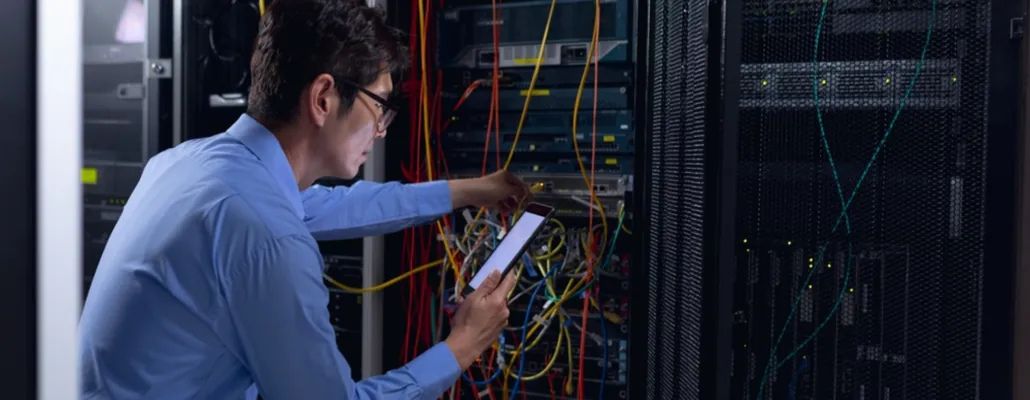
As demand increases, infrastructure limitations become harder to ignore. Aging hardware may struggle to support modern workloads, while limited processing power and storage capacity can reduce system efficiency.In many cases, businesses rely on temporary fixes, adding incremental resources rather than addressing the root problem. This approach often leads to higher costs over time and does not provide a sustainable foundation for continued growth.
A growing organization places a significant strain on network infrastructure. Increased data traffic, cloud usage, and remote connectivity can expose weaknesses in both wired and wireless networks. Slow connectivity, inconsistent Wi-Fi coverage, and bandwidth limitations begin to impact daily operations. Without redundancy measures in place, even minor disruptions can result in downtime that affects multiple departments simultaneously.
As teams expand, managing user access becomes more complex. Each new employee requires appropriate permissions, and changes in roles require updates to access levels.
Without structured onboarding and offboarding processes, gaps can emerge. Former employees may retain access, or current staff may have more permissions than necessary. These inconsistencies increase both operational risk and security exposure.
Manual processes that worked for a smaller team often fail to scale. Tasks such as system updates, user provisioning, and issue resolution become time-consuming when handled without automation or standardized workflows.Recurring technical issues also become more disruptive. What was once a minor inconvenience can evolve into a consistent barrier to productivity, affecting multiple teams and slowing overall output.
Growth naturally increases your attack surface. More devices, users, and systems create more entry points for potential threats.At the same time, rapid expansion can outpace security implementation. Inconsistent policies, outdated systems, and lack of monitoring leave vulnerabilities unaddressed. Without a structured cybersecurity framework, the risk of data breaches and operational disruption increases significantly.
As businesses grow, different departments may adopt different tools, systems, and configurations. While this may solve short-term needs, it introduces long-term complexity. Without standardization, managing and troubleshooting systems becomes more difficult. IT teams spend more time resolving compatibility issues and less time focusing on strategic improvements. This fragmentation can slow down future growth initiatives.
Many growing businesses rely on reactive, break-fix IT support models. While this may work in early stages, it becomes insufficient as complexity increases. Delays in issue resolution can disrupt operations, and the absence of proactive monitoring means problems are often identified only after they impact users. As reliance on technology grows, this reactive approach introduces unnecessary risk.
Growth often highlights the absence of a structured IT roadmap. Without clear planning, technology investments tend to be reactive, leading to unexpected expenses and inefficient resource allocation. Businesses may struggle to determine when to upgrade systems, how to prioritize investments, or how to align IT decisions with long-term goals. This lack of direction can slow progress and increase operational costs.
Sustainable growth requires a shift from reactive support to a more proactive and strategic IT approach. Continuous monitoring allows issues to be identified early, reducing downtime and improving system reliability. Standardization across systems, devices, and processes improves efficiency and simplifies management. At the same time, long-term planning ensures that infrastructure evolves alongside business needs, rather than lagging behind them.
Working with an experienced IT provider gives businesses access to structured processes, advanced tools, and specialized expertise. This support provides better visibility into system performance and helps identify potential risks before they escalate. An external partner can also guide technology decisions, ensuring that systems are scaled effectively without unnecessary disruption or overspending.
Castellan Inc. takes a relationship-focused approach to IT services, working closely with businesses to understand both operational and technical requirements. As a family-operated organization, the team prioritizes long-term partnerships and consistent service quality. Their combined expertise in business operations and technology enables them to deliver practical, scalable solutions tailored to each client. With experience across multiple industries, Castellan helps organizations strengthen their IT environments, improve efficiency, and prepare for continued growth.
Business growth often reveals gaps in your IT environment that were previously manageable or unnoticed. Left unaddressed, these issues can impact performance, productivity, and security. Taking a proactive approach, through structured planning, system standardization, and continuous monitoring, ensures your technology can support ongoing expansion. For businesses looking to strengthen and scale their IT infrastructure, Castellan Inc. provides the expertise and guidance needed to build a stable, future-ready environment.
Read:
Common challenges include system slowdowns, infrastructure limitations, network congestion, security gaps, and increased complexity in user and device management.
Preparation involves assessing current infrastructure, implementing scalable solutions, standardizing systems, and establishing proactive monitoring and maintenance practices.
Upgrades should be planned before performance issues begin to impact operations, ideally based on projected growth and usage trends.
Growth increases the number of endpoints and users, which expands the attack surface. Without consistent security measures, this leads to higher vulnerability.
Managed IT services provide proactive monitoring, faster issue resolution, strategic planning, and scalable solutions that align technology with business growth.
Managing Partner at Castellan
Mikey Sodetani is a highly sought-after expert, renowned for his dedication and innovative problem-solving. As managing partner at Castellan, a leading IT firm in Calabasas, he has become a standout figure in Los Angeles. Sodetani has played a key role in guiding Castellan through major technological shifts, from the early days of smartphones to the complexities of cybersecurity and cloud computing.